
Wednesday, September 10, 2008

Up Your Energy with Allergy Techniques!

Up Your Energy with Allergy Techniques!
By Heather Dominick

What we do is just as powerful as what we eat to keep ourselves operating at our highest energy. This especially applies during allergy season. Instead of just popping a pill and trekking ahead as usual, try taking care instead.

Know Your Season: If you know exactly what allergy triggers you are susceptible to (get tested by your doctor or carefully chart your reactions this year), you can take extra care by following this seasonal guide:

Alder: Feb, Mar, Apr, May

Hazelnut: Feb, Mar, Apr, May

Elm: Feb, Mar, Apr, May

Birch: Mar, April, May, June

Maple: Mar, April, May, June

Oak: Mar, April, May, June

Sorrel: April, May, June, July, Aug, Sept

Stinging Nettle: April, May, June, July, Aug, Sept

Beech: April, May, June

Spruce: April, May, June

Buttercup: May, June, July

Mugwort: July, Aug, Sept

Horseradish: This condiment has an extreme ability to thin abundant mucus so it can drain from the nasal passages. Eat as much as you can tolerate (yummy on crackers!) or make a tea by combining horseradish, lemon juice and honey. Drink throughout the day.

Keep Windows Closed: It may seem simple and you may feel like you are missing the fresh air of spring, but it could save you money and sneeze power. Secure windows of your home and car during your tough season.

Reduce Dairy Intake: Especially for allergy sufferers, dairy products can inhibit breathing and increase mucus. Reduce dairy; increase breathing.

Showers and Baths: Take a shower at night to remove any pollen that may have collected in your hair or nails during the day. Take a HOT bath to raise your body temperature to help the body purge toxins. Add the essential oils (a11 natura1, no artificial fragrances) of camphor, menthol and eucalyptus to help with decongestion (You can also mix these oils with sweet almond oil and apply under the nose and on the neck during the day for easier breathing).

Vitamins C and E: These two power vitamins help support healthy immune function as well as prevent allergic response. Your best bet for intake increase: (Vitamin C ) citrus fruits, bell peppers, chili peppers, amaranth, berries, cabbage, parsley, potatoes, sprouts, tomatoes (Vitamin E) nuts, seeds, whole grains, dark green leaves of cabbage, broccoli, cauliflower, dandelion greens, sprouts, asparagus, cucumbers and spinach.

Heather Dominick, The Energy Expert is an energy and nutritionspecialist with over 10 years of teaching and coaching experience. Heathers primary focus is in helping others identify sources for increasing physical energy and making permanent lifestyle changes. To sign up to receive your free chapter of the famed e-Book Get EnergyRICH, for her freebie how-to articles and no-charge teleclasses on creating your most energized life, visit http://www.Individual-Health.net

Article Source: http://EzineArticles.com/?expert=HeatherDominick
http://EzineArticles.com/?Up-Your-Energy-with-Allergy-Techniques!&id=184669

Tuesday, September 9, 2008

Allergies Allergy Shots

Allergies - Allergy Shots
By Michael Russell

In this article we're going to discuss a common form of battling allergies with the use of allergy shots and how allergy shots work to build up a person's immunity to outside allergens.

A growing number of people who suffer from allergies and not finding the relief that they want from antihistamines are turning towards allergy shots to hopefully put and end to their dreaded sneezing, wheezing, itching and misery.

So exactly what are allergy shots? Allergy shots actually contain a very small amount of whatever it is that you're allergic to. If you have multiple allergies, such as a combination of indoor and outdoor allergies, then two shots are actually given. One for the outdoor allergies and one for the indoor allergies.

How do allergy shots work? Well, in theory it's actually very simple. Allergy shots help your body fight the allergen that is bothering you. When you get shots of the allergen itself your body makes antibodies to the allergen. These antibodies help block the effects of the allergen itself. Your symptoms become less severe because the antibodies block the way your body reacts to the allergens. After taking enough of these shots over a long period of time you might start to get relief from your symptoms. This relief should last for a very long time.

Many kinds of allergies can be battled with allergy shots. They work very well with allergies to pollen, or what is commonly called hay fever. They also work for eye allergies, bee sting allergies, and even some drug allergies. In many people, allergy shots can greatly improve asthma symptoms. Most people will get allergy shots after they have exhausted every other option.

Unfortunately, not everyone can get allergy shots. If you have severe asthma or a heart problem you should not get allergy shots. Also, if you take a beta blocker for a heart condition you shouldn't take allergy shots. Children under five years of age should also not get allergy shots. Also, you shouldn't start allergy shots if you are pregnant.

If you decide, along with your doctor, to get allergy shots, he will first have to give you an allergy test to determine what allergies you have. This test in effect is actual treatment as some of each allergen has to be injected into you in order to do the test. After the results are in, a vaccine can be made which can then be given on a weekly or biweekly basis or for whatever interval the doctor thinks is necessary.

Once you start taking your shots you will at first have to take them every week or every other week. After about 6 months most people can go on what is called maintenance and get shots once each month. This usually continues for about 3 to 5 years until eventually most people no longer need to take shots because their immunity has been built up enough to the allergens.

Allergy shots are normally not harmful but some people do have reactions to them. If you should have a severe reaction the doctor will usually keep you in his office for about 20 minutes each time you get your shot so that if you have a reaction he can give you something to counteract it.


-------------------------------------------------------
Michael Russell
Your Independent guide to Allergies
-------------------------------------------------------

Article Source: http://EzineArticles.com/?expert=MichaelRussell
http://EzineArticles.com/?Allergies---Allergy-Shots&id=162644

Monday, September 8, 2008

Japanese Smart Technology Offers Allergy Relief

Japanese Smart Technology Offers Allergy Relief
By Mark E. Richardson

Every Achoo filled Linda Meyers head filled with 2 things: congestion and frustration. I was desperate and frustrated. My sinus headaches would create miserable days and sleepless nights. The medications would make me drowsy and tired. I finally decided to look for natural allergy relief. I wanted to see if any alternatives to the allergy medications I'd been taking could help.

Linda is one of 65 million Americans who suffer from allergies, and according to her prevention is the best medicine: I've really tried to create a safe haven in my house, with allergy prevention to reduce my allergy attacks. I bought allergy resistant sheets, mattress covers, got rid of the carpeting, and bought an air purifier. I wanted to see if I could prevent allergies before the pollen count goes up.

NEW SMART TECHNOLOGY REMOVES POLLEN, DUST

Help may be on the way as the Japanese have developed new sensors that detect pollen, odor, and dust. Originally created for more accurate pollen reports, this new technology ihas paved the way for a new generation of Smart air purifiers and Smart home air cleaners. According to Sam Barfield - an air expert in Los Angeles: Air purifier technology hasn't changed a bit in over 40 years old. Technologies like negative ion, HEPA, and UV have been around a long time. The problem has been: Do Air Purifiers Work?, What technology is best? . This new technology solves these problems by continuously adjusting the air quality to be the very best based on what's in the air. It even saves electricity.

HAS IT HELPED?

According to Linda:

Rather than depending on anti-histamines and drugs I've been able to reduce my allergy attacks about 70%. Knowing I can get a good night's sleep also has reduced some of the stress. I'm still looking for a cure, but in the meantime I'm feeling better and feel more in control.

Mark Richardson is a Los Angeles based Health Practitioner and Author. He has been interviewed on over 300 radio and TV stations across the U.S. on how he cured his allergies and asthma by changing 3 things in his external and internal environment. To find Smart Allergy Air Purifiers try http://www.airpodcleaner.com. You can email Mark any questions at healthideal@hotmail.com

Article Source: http://EzineArticles.com/?expert=MarkE.Richardson
http://EzineArticles.com/?Japanese-Smart-Technology-Offers-Allergy-Relief&id=435201

Mechanisms of Food Allergy

Mechanisms of Food Allergy
By Joe Marafioti

A food allergic reaction occurs as a result of some component of the immune system, which normally protects us from infectious agents, inappropriately reacting to the proteins in foods we eat.

Allergic reactions to foods can be broadly divided into immediate on-set and delayed on-set reactions.

IgE-Mediated Food Allergies

The parts of the immune system responsible for immediate on-set reactions (the most dramatic example of which is food anaphylaxis) are IgE antibodies.In allergic individuals (who are sometimes referred to as being atopic) eating certain food proteins (such as whey and casein protein contained in cows milk) results in the production of specific IgE antibody molecules directed against the protein. The second time the individual eats the food, these specific IgE molecules interact with each other, and the protein, to cause the release of harmful chemicals (such as histamine) from special mast cells. This causes the damage associated with the symptoms of food allergy. Damage may occur to the skin, respiratory system or gastrointestinal tract, where the symptoms of food allergy are almost exclusively seen.

Non-IgE-Mediated Food Allergy

T-cells are the components of the immune systems responsible for delayed-type food allergic reactions. In individuals with a predisposition for delayed on-set food allergy, initial ingestion of food protein leads to the production of specific types of T-cell. When the food is subsequently ingested, the food protein is processed in a variety of ways and presented to the previously generated food-specific T-cells. These T-cells then invade the area of the body about to suffer damage EG skin, bowel. This processing, presenting and invasion can take 24-48 hours which explains the delayed response. T-cells release chemicals that, through a chain of events, lead to the damage associated with symptoms of food allergy.

More informations: Act Against Allergy

by AAA Editorial Board

Date of publication: 01/02/2006

Source: Milk Allergy site

Article Source: http://EzineArticles.com/?expert=JoeMarafioti
http://EzineArticles.com/?Mechanisms-of-Food-Allergy&id=559200

Three Surefire Ways To Avoid This Spring's Allergy Attack

Three Surefire Ways To Avoid This Spring's Allergy Attack
By Jeanina Bartling

Daffodils and Robins are out and about, celebrating the coming of Spring.

Will you celebrate with them?

Or run for cover!

I can tell you this ~ more than 50 million Americans dread Spring.

And no wonder. In the U.S., allergies rank as the 6th leading cause for chronic diseases.

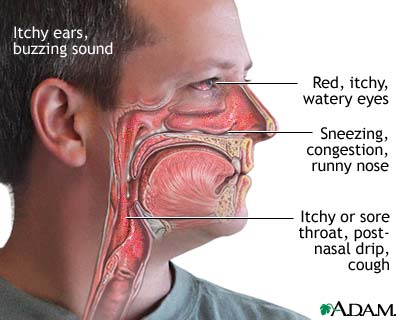
Sneezing and wheezing, runny noses, stuffed up sinuses, burning, itchy eyes ~thousands of people know these miseries well.

But they needn't. Nor need you!

Here's 3 simple things you can do to make this year memorably allergy-free.

The First Way: Protect Your Cilia

You simply must take care of your cilia.

What's that? You're not sure what cilia are, let alone whether or not you have any!

Oh yes, my friend, you have many cilia, and they serve you well as some of your most effective health guardians.

Cilia are tiny hairs found in the nose designed to catch and get rid of any intruders. Spring pollens, viruses, bacteria, all of these are trapped by the hairs and the sticky mucus which act in concert to deny an entrance to the body.

Unfortunately, today's harmful pollutants - cigarette smoke (either personal or passive), diesel fumes, emissions by vehicles and power plants and many otherpollutants - put our cilia at great risk.

Cilia moves to a beat. Usually about 8-15 beats a second. This transports the irritant toward the back of the nose where it's automatically swallowed and disposed of in the stomach.

Pollutants can slow or stop the beat. Cilia's partner, mucus, can be dried by too-dry air or not enough water in the body. These conditions allow the bacteria to attach themselves to a cell.

And that's when the problems begin.

Bacteria can't invade our bodies unless they're successful in getting a finger or toe hold onto one of our cells. The part of the cell that they latch onto is a specific sugar or sugar complex.

Which brings me to the 2nd way you can avoid this Spring's allergy attack:

The Second Way: Wash your nose with xylitol nose wash

Meet the new kid on the block ~ Xylitol, spelled with an x but pronounced with a z.

Actually not so new. In the late 1800's, Emil Fischer, a German chemist, discovered and manufactured this healthy 5-carbon sugar. Re-discovered by the Finnish Sugar Co. Ltd. in Finland during the sugar scarcity due to World War II, xylitol now continues to receive more and more attention.

What xylitol nose wash does is:

1. Keep your cilia healthy

2. Bathe your cells in a healthy,

alkaline sugar that bacteria don't like.

Approved by the U.S. Food and Drug Administration, xylitol is also being actively promoted by many dental associations.

It's become one of the most popular items in health food stores simply because of its many health benefits.

Eliminates allergy-causing irritants

in the nose

Prevents the growth of bacteria

Prevents tooth decay

Creates alkaline environment

Possesses a glycemic index of 7

Improves bone density

and more...

Our bodies manufacture a certain amount of xylitol. It's also found in fibrous vegies and fruits and trees. Most of the commercial xylitol comes from either the bark of birch trees or corn cobs.

A completely natural product with no side effects, xylitol is being championed for its health-giving properties.

Your health food store most likely carries xylitol nose spray. Or you can order some from the comfort of your home by going to EmeraldForestXylitol.com You'll find the folks there dependable and ethical with more fascinating information on this health-promoting product.

The Third Way: Drink Your Water

Water. It should top the list of The World's Most Wonderful Wonders.

It cleans. It satisfies. It gives life.

Serving time as a political prisoner in an Iranian prison, Dr. Fereydoon Batmanghelidjwas assigned the task of treating other prisoners who suffered from a variety of ills.

He had nothing with which to treat them. Except water.

You can read about some of his miraculous successes using only water in his book, Your Body's Many Cries For Water.

Our cilia needs water in order to do the job it's been earmarked to do. Most folks walk around in a semi-dehydrated state which leaves them vulnerable to many physical and mental disorders.

One good guideline: Drink enough water to make your urine colorless.

Well, there you have it. Three simple ways to help your body say NO! to any energy-sappers.

I hope you'll decide to step into this Spring with a new spring in your step.

Who wants a body and a mind you can be pleased with? How about stable emotions? Discover how easily you can enjoy even unexpected change. At http://www.thefeelgoodsite.comyou'll find a FREE mini-course on 10 Ways To Enjoy Change. You'll be delightfully surprised with these simple, yet innovative techniques. Jeanina Bartling is a published author of stories and articles for children who has now turned to the internet to share her passion for good health. http://www.thefeelgoodsite.com

Article Source: http://EzineArticles.com/?expert=JeaninaBartling
http://EzineArticles.com/?Three-Surefire-Ways-To-Avoid-This-Springs-Allergy-Attack&id=170758

It's Allergy Season: Don't Let it Ruin Your Thanksgiving Plans

It's Allergy Season: Don't Let it Ruin Your Thanksgiving Plans
By Susan Dunn

Writing this from Dallas, Texas one of the ragweed hotspots of the nation, I'm particularly aware of allergies and the havoc they can cause. Here are some facts about allergies:

More than 50 million Americans suffer from allergies. Ragweed pollen is probably the largest single seasonal allergen in North America. It is estimated that one square mile of ragweed plants would release 16 tons of pollen in one season. Even skin contact with ragweed can cause dermatitis.

An allergy is a heightened sensitivity to a foreign substance (called an allergen) which causes the bodys defense system (the immune system) to overreact when defending itself. Normally, the immune system would only react if a harmful substance such as bacteria attacked the body. But for people with allergies, their own immune system is working too hard and it reacts even when relatively harmless substances such as pollen are present. The severity of an allergic reaction can vary from mild discomfort to life threatening situations. [Source: www.pollen.com

Because of this assault on the immune system, its crucially important to take supplements that nutritionally support the immune system. By the previous definition, you can see that an already assaulted immune system becomes further weakened with allergens. Our immune system is our health, our first line of defense for bacteria, for instance, and our ONLY line of defense for viruses. While we have antibiotics for bacteria, there is no know cure for a virus, as you know.

Its smart to prepare ahead of time by getting the necessary information. Sign up at http://www.pollen.com/Pollen.com.asp and be alerted in the morning of conditions likely to exceed the trigger point, the point where most allergy sufferers will start to experience symptoms.

If you have a website, you can be of service to others. Probably 25% of your website visitors suffer from allergies. At http://www.pollen.com/Pollen.com.asp, you can get the html to put a pollen alert box on your website either a zip code entry box or for any town in the U.S.

The most extreme allergic reaction is called anaphylactic shock. Immediately after contact the individual will suffer difficulty breathing, itchiness, welling of the lips and throat, and drop in blood pressure, and finally collapse. If you've ever suffered anaphylactic shock, you should carry injectable adrenaline from your doctor and keep some at home as well. Have the 911 number handy, and seek medical attention immediately.

Its also important to know that subsequent contact with a particular allergen can be much worse then the first time; for instance, if youre stung by a bee. Instead of building up resistance, you build up sensitivity. That's why people talk about their allergies coming on suddenly. Everythings fine, theyre 30 years old, and one night they have beer and shell fish and end up in the ER. Out of the blue, we say. It never happened before!

Likewise, normally innocent foodstuffs such as peanuts, which dont bother one person can actually kill someone else whos susceptible. One way to determine what you're allergic to is to see your personal physician and get an allergy test.

Allergic conditions include:

(1)Hay fever and allergic asthma. Pollen from grasses, ragweed and trees, mold and dust can all cause respiratory and nasal problems.

(2)Eczema. A special form of skin reaction. Cement dust isparticularly likely to cause this.

(3)Urticaria (itchy hives). Most of us get this from nettles. You can also get this from strawberries, seafood, cheese; it depends.

Once the allergy is established, you must remove the cause or avoid it. Here are some tips:

1.Wear hypoallergenic gloves.

2.Use a filter in the vacuum cleaner to remove dust mite droppings and an air filter on your A/C which you clean often. Also clean the ducts.

3.Remove heavy drapes and bedspreads from the bedroomand replace with blinds. Take up old carpeting and replace with tile or wood flooring. Do not use area rugs.

4.Keep your immune system built up with a product like Arbonnes DefenseBuilder or rebuild it with Get Well Soon Dietary

5.Use protective clothing when handling material such as cement.

6.Use a filter face mask when in dusty areas and when mowing the lawn in high pollen areas.

7.Check food labels for potentially allergenic ingredients such as peanut products, wheat, gluten and corn. Again, an allergy test from your personal physician can alert you to potential problems.

It is extremely important that you avoid irritants such as mineral oil, fragrances of any sort, and impure ingredients in your cosmetics, shaving cream, makeup, and skin lotions. What you put on your skin irritates there, and then is absorbed into your blood stream where it causes further problems. Choose well-researched, dermatologist-approved, fragrance and mineral-oil free, scientifically-proven nutritional supplements, cosmetics, lotions and shaving cream.

There is some evidence that allergen sensitivity builds from a too-early introduction to certain substances. Consider the generation born in the late 40s that is basically allergic to orange juice because of having been introduced to it in the hospital, virtually at birth since there was no other way to prevent scurvy at the time and it was considered good medicine. No pediatrician these days would recommend you give orange juice, egg white and other things to your child before the age of one year. Continue this prudent and safe care by using only safe baby products for skin and bath.

Living with allergies and allergens is a 24/7 prospect for all of us. You cant move away from them, and you cant get rid of them all, so eliminate the offenders that you can since the effect is cumulative, and stay informed.

Susan Dunn, MA, EQ coaching, http://www.susandunn.cc, mailto:sdunn@susandunn.cc. Individual coaching, business programs, EQ Alive! #1 rated program to increase your EQ simple, no memorizing, it works. Email for information, and free ezine.

Article Source: http://EzineArticles.com/?expert=SusanDunn
http://EzineArticles.com/?Its-Allergy-Season:-Dont-Let-it-Ruin-Your-Thanksgiving-Plans&id=116485

Sunday, September 7, 2008

Food Allergy and Food Intolerance Testing

Food Allergy and Food Intolerance Testing
By Elizabeth Harfleet

The number of people in the UK suffering from food intolerance and allergies is increasing. Scientists believe that this is partly because of our love affair with junk food as well as our exposure to harmful toxins present in many foods.

However food intolerance and allergies can also be triggered by food that has not been exposed to chemicals. Recent research, for instance, suggests that eating peanuts when pregnant can cause the baby to develop a peanut allergy.

This can have very serious consequences as having an allergic reaction to peanuts can cause a person to go into anaphylactic shock. Peanut allergies are often so severe that even a slight trace of peanut dust can produce itching, rashes and stomach problems in sufferers.

However, not everyone who has a problem with certain foods is allergic to them. Sometimes they can simply have a food intolerance rather than a food allergy. Food intolerance and food allergy are both caused by inappropriate immune responses to problem foods. However the reaction is very different. Food allergies provoke an immediate and sometimes severe reaction whilst food intolerance produces symptoms which can take hours or even days to develop.

Of course the best thing to do is identify whether you have a food intolerance or allergy and then eliminate the problem foods altogether from your diet. Food allergy and food intolerance testing is a quick and easy way to find out if there are foods that are making you feel ill. You can arrange food allergy and food intolerance testing online or by visiting your GP.Whilst identifying the culprit substances and removing them from your diet is an important starting point, strengthening your immune system is also very important.

Since much of the immune system exists within the digestive tract one of the best ways to support it is by ingesting particular vitamins and minerals.

Foods that are rich in anti-oxidant vitamins A, C and E, such as fresh fruits and vegetables should be included in your daily diet. The mineral Selenium can also be a useful inclusion, as can garlic. Pycnogenol, a dietary supplement made from pine bark extract is high in anti-oxidants and can help alleviate allergic reactions as well as help cardiovascular health.

Food intolerance and food allergies can make you miserable. By identifying whether you are a sufferer and what foods are causing you problems you will be able to improve your sense of wellbeing. Food allergy and food intolerance testing can help you do this whilst strengthening your immune system is the starting point on the road to better health.

Elizabeth Harfleet, is a leading a UK based nutritional therapist who sells food intolerance testing kits via her website.

Article Source: http://EzineArticles.com/?expert=ElizabethHarfleet
http://EzineArticles.com/?Food-Allergy-and-Food-Intolerance-Testing&id=200612