Friday, January 16, 2009

Could Your Dogs Canine Skin Problem Be Caused By A Dog Allergy?

Could Your Dogs Canine Skin Problem Be Caused By A Dog Allergy?
By Jennifer P. April

Is she suffering from dry, itchy skin or constant hot spotsred sores on the skin?

A canine skin problem can be something as simple as over bathingwhich can dry out the skin or it can be something more serious and indicate an illness or allergy.

If your dog has a chronic skin condition you find difficult to get rid of or keep under control, she may have a dog allergy.

About 20% of dogs in the United States have a dog allergy and of this 20%, about 10% are allergic to food. The rest of allergies are a combination of flea, contact, inhalant (environmental allergies) and bacterial.

All of these allergies can be treated.

Of course, the first step is to determine what type of allergy it is. You can start with eliminating corn and wheat from your dogs dietthe most common food allergens. Check the dog food labels carefully. You may have to go to a specialty pet food store to find a brand without corn or wheat filler. Look for a protein source to be the first ingredient on the label.

Fleas can also cause canine skin problems, besides the usual irritation, your pet could even be allergic to them. If your pet has fleas then youll have to take drastic measures to de-flea your pet, yourself and your home. Fleas are small, dark creatures usually found close to your pets skin if she has them. Youll see them pretty easily, especially if your pet has a light colored coat. They can also live in your carpet and will resort to biting humans. They usually leave small red marks as an indication of their bites.

Besides allergies, your pet could have an infection like scabies or dermatitis. If youve already ruled out allergies, or you suspect its cause is something else you should visit your vet for a professional opinion.

Some things that can help soothe dry, irritated skin: *Oatmeal Shampoo used with periodic bathing. Monthly bathing is frequent enough. Every week is too often and will dry out a dogs skin.

*Omega 3 supplementsFish oil pills can be givenmy dog eats them like treats--or you can get a liquid to pour over the food, this will also help to give your pet a beautiful, shiny coat

*Diet Change eliminating corn and wheat as these are the most common food allergies

*A trip to the vet to eliminate an illness like scabies

A canine skin problem can have many culprits. It may take a process of trial and elimination before finding the underlying cause and the thing that most helps. But you can find help and your dog will feel so much better!

Jennifer April bakes healthy, natural dog treats and offers healthy dog treat recipes from her website, http://www.all-natural-dog-treat.com Your stop for all-natural-dog-treat recipes and tips on improving your dogs health and happiness all naturally.

Article Source: http://EzineArticles.com/?expert=JenniferP.April
http://EzineArticles.com/?Could-Your-Dogs-Canine-Skin-Problem-Be-Caused-By-A-Dog-Allergy?&id=446923

Sunday, January 11, 2009

Holistic Approach to Dog Skin Allergy

Holistic Approach to Dog Skin Allergy
By Mary Rose Antonio

The best way to deal with dog skin allergy is to approach the problem holistically. One dog allergy solution is to make sure your dog enjoys overall good health and has a strong immune system. This way, he'll less likely to react to allergies and develop uncomfortable symptoms.

The following are surefire ways to beat dog skin allergy:

1) Feed your dog some meat - gradually switch to a healthy diet made from high quality whole meats (not meat by-products). You can also try feeding him chicken, turkey, salmon, bison, rabbit, duck, or venison. Remember to rotate the meat.

2) Don't give your dog grains - and that means no corn, wheat and other grains. Try alternatives such as gluten-free brown rice, spelt, amaranth, quinoa, or kamut. These are available at health stores.

3) No preservatives - BHT, ethoxyquin, and potassium sorbate are common artificial additives that are toxic to your dog's health. Check your dog food's label if it consists of any of the above ingredients. If it does, buy other dog food. I use wellness for my dogs.

4) Give him supplements - Antioxidants such as vitamins A, C, and E as well as CoQ10 and selenium strengthens his immune system and helps prevent allergic reactions.

5) Use natural pest control - Adding garlic, Vitamin B1 or brewer's yeast to his diet helps repel fleas. Commercial flea and tick powders, shampoos, and collars are made with toxic chemicals that can irritate your dog's skin and overburden his immune system.

6) Keep his area clean - avoid using chemicals to clean his area and surroundings.

7) Avoid over-vaccinations - over-vaccination damages immunity and can lead to the development of allergies and other problems.

8) Use herbs - They can help the body rid itself of toxins, including those substances that cause allergic reactions such as burdock, alfalfa, red clover, dandelion , and spirulina.

9) Keep your dog clean - avoid cheap commercial shampoos and conditioners - they dry out your dog's hair and skin and even aggravate his allergies.

Dealing with dog skin allergy holistically takes time and commitment but it is the best dog allergy solution you can give to your dog.

Mary Rose Antonio is a physical therapist for 20 years now, a great believer in natural healing and a proud owner of two dogs. She is also the owner of http://www.ultimate-guide-to-dog-care.com. She invites you to learn more about taking care of your dog.

Article Source: http://EzineArticles.com/?expert=MaryRoseAntonio
http://EzineArticles.com/?Holistic-Approach-to-Dog-Skin-Allergy&id=365051

Tuesday, December 9, 2008

If Effective Drugfree Asthma and Allergy Treatments Really Exist Why Doesn't Your Doctor Know?

If Effective, Drug-free Asthma and Allergy Treatments Really Exist, Why Doesn't Your Doctor Know?
By Susan Millar

This is an excellent and important question that many people ask about natural asthma and allergy treatments. There are several reasons why doctors may not know or even if they do know, why they won't tell you.

One reason your doctor may be unaware of an effective, natural drug-free asthma and allergy treatment is that they generally are very busy and simply don't have the time to do the research about it. Keeping up with all the current medical publications can easily be a full time job in itself. Sadly, the main reason is that many traditional doctors don't believe in natural treatments and think that drugs are the only acceptable routes to take. The reality is drug companies often fund medical schools. These huge multi-national drug companies spend billions of dollars a year to develop and promote drugs that they want doctors to prescribe and you to keep using. They spend multi-millions on advertising and funding medical schools to convince doctors and the public that drugs are the best and only solution to asthma and allergies.

The bottom line is money: they would like you to continue to buy their expensive drugs and doctors want you to continue visiting them or they would both be out of business. The sad part is these drugs are expensive, usually don't work very well since they only mask the asthma or allergy symptoms. Even worse, many of them also have dangerous side effects. If you currently take asthma drugs, knowing what the side effects are is important.

For a listing and description of asthma drug side effects caused by the drugs you may be taking please see http://www.dramatic-asthma-relief.com/drugs.htm

Taking responsibility for your own health is the first major step and the fact that you are reading this indicates that you may be interested in investigating natural solutions for your asthma and allergy symptoms. If you are interested in learning more information about safe, effective drug-free solutions to your asthma and allergies please visit: www.dramatic-asthma-relief.com

Susan Millar is a former asthma and allergy sufferer. She is a researcher and the author of The Dramatic Asthma Relief Report, based on extensive research from internationally respected medical publications about a genuinely effective drug-free treatment for asthma & allergies, which helped her to eliminate her asthma and allergies. This book has helped many other sufferers worldwide to do the same.

Please visit her website for more information about asthma, allergies and the Dramatic Asthma Relief Report: http://www.dramatic-asthma-relief.com/

Article Source: http://EzineArticles.com/?expert=SusanMillar
http://EzineArticles.com/?If-Effective,-Drug-free-Asthma-and-Allergy-Treatments-Really-Exist,-Why-Doesnt--Your-Doctor-Know?&id=195787

Monday, November 24, 2008

SKIN ALLERGY vs. Cleaning

SKIN ALLERGY vs. Cleaning
By Amie Porter

Lots of people think that skin allergies are caused by pollution and dirty environments. This is true but the good news is that there are positive things you can do to reduce allergic reactions and symptoms, such as asthma.

Dust mites are too small to be seen with the naked eye. You can find all sorts of information about dust mites on the Internet. However here we will talk about how to control dust mites effectively and reduce symptoms from them.

* Change bed sheets, pillowcases and blankets at least once a week. To kill dust mites, you have to wash bedding in a washing machine at a temperature of at least 130 F. So we recommend you to choose light coloured bedding so that their colour will not noticeably fade.

* Protect your mattress, box springs and pillows with allergy-proof covers. This keeps dust mites away from the flakes of dead human skin cells which are a primary food source for them.

* Keep stuffed toys away from your bed. You might be amazed to learn that stuffed toys can attract dust mites.

* Reduce humidity. It helps if you can lower the relative humidity in your house, normally lower than 50% is sufficent. When dust mites can't absorb moisture from the air they will shrink and die. You can use air conditioners and dehumidifiers to achieve this benefit.

* Use stone, hardwood or laminate flooring instead of carpet if possible This eliminates an ideal dust mite territory. If you cannot choose your flooring, make sure that you use asteam cleaner on your carpets at least once a year.

* Dust and vacuum your home at least once a week. You need to clean your house regularly. Find a cleaner if you cannot afford the time. Regular dusting and vacuuming will help to control dust and therefore dust mites in your house. Use a damp mop or damp cloths on hard floors and furnishings as dry cloths stir up dust mite remains. Vacuum carpets, sofas, curtains and window blinds regularly with a powerful vacuum cleaner, preferably with a special filter.

* Keep away furry and feathered animals from your bedroom. Your pets' dead skin cells are another food source for dust mites. So it's best to have your pets sleep as far away from your bedroom as possible. You can treat your pets' sleeping areas the same as yours, i.e. regular cleaning and use allergy-proof covers.

Every little helps. For more information, use our special cleaning team, if you are based in London or the South East.

Amie Porter recommends London Rate Cleaning Services to minimize your allergy to dust and dust mites. Visit us at http://www.londonrate.com for Cleaning Services London, Cleaners London, Builders London, etc.

Article Source: http://EzineArticles.com/?expert=AmiePorter
http://EzineArticles.com/?SKIN-ALLERGY-vs.-Cleaning&id=174388

Sunday, November 23, 2008

Allergy In Dogs What Do I Do?

Allergy In Dogs, What Do I Do?
By Candice Lee

Oh no...allergy in dog...what do I do? Today there seems to be so many dogs with allergies. Pet owners are frantically trying to find answers to help their faithful companions. So what does cause allergies in dogs? One place to start looking for answers is right in front of your dog's nose...his dog bowl! So, what ARE you feeding your dog?

Dog food today is filled with all kinds of grains that are often difficult to digest (corn, wheat, gluten and soy), and which are often used as a protein source instead of meat. Allergies in dogs are sometimes related to these grains in their food.

In an effort to feed our dogs a healthy diet, we are led to believe that these grains are good for them. But don't let that fool you......... it's not because it's healthy for our dogs. It's because the grain is cheap and dog food manufacturers make a much bigger profit using grains. So, just what is the best food for our faithful companions?

Often the answers to our questions can be found in nature. We need to remember that dogs are canines and their ancestry dates back to wild dogs and wolves. These animals hunted in packs. If you examine their teeth, you will find that they were designed to rip and tear flesh, muscle and bone.They were created to eat meat and by nature, they are carnivores. The Native Americans of North America raised dogs and their diets consisted mostly of protein.

Many of the maladies, diseases, and allergies that our dogs are experiencing today are, unfortunately, directly related to the food they eat.

Three years ago our dog Elly became very ill and had to have her spleen removed. After the surgery, we started researching about dog foods and what we found was very shocking. We decided to give her a dog food that was much more balanced and included more protein and antioxidants.

Gradually her health improved, her coat became full and soft, and today she is an active 11 year old dog and doing quite well.

We have a responsibility to take care of our faithful friends and giving them a good, balanced nutritional food, without added grains like corn and wheat, will help ensure a long and healthy life. And hopefully, allergy in dog, be gone!

Candice is a wife, mom, author and proud owner of her faithful companion Elly. If you'd like to know what we feed our dog Elly:-) visit: http://www.EllysFood.info

Article Source: http://EzineArticles.com/?expert=CandiceLee
http://EzineArticles.com/?Allergy-In-Dogs,-What-Do-I-Do?&id=618679

Saturday, November 22, 2008

The Flea Allergy in Dogs and Cats

The Flea Allergy in Dogs and Cats
By Grace Palce

Fleas multiply fast and do not voluntarily leave the body of the pet, the flea allergy will last for a long time.

There are symptoms that will tell the pet owner that the dog or cat is being troubled by a flea allergy. Some symptoms displayed by dogs are slightly different to those found in cats. But in general, the symptoms of a flea allergy are continuous itching, loss of hair, occurrence of sores, and unexplained depression.

Among dogs, the specific symptoms are:

Massive loss of hair
Presence of red and swollen sores
Irritation and scratching in certain areas, such as:

  • Along the tail
  • On the rump area
  • All over the hind legs
  • The region of the groin, which is the sensitive area between the hind legs
  • Among cats, the symptoms of flea allergy are:

    Constant scratching in various parts of the body
    The formation of painful scabs in sensitive areas, such as:

  • The neck
  • The face
  • The groin
  • The main body
  • A diagnosis of flea allergy no longer involves skin tests and blood tests. The mere presence of fleas indicates that flea allergy has befallen on the pet. The owner can even conduct his own examination by looking for fleas in the coat of the dog or cat. Fleas are parasitic insects that feed on the blood of their host. They are tiny but can cause powerful irritations. They are usually black in color, which makes them more difficult to detect especially if the coat of the pet is also dark-colored.

    Fleas also move fast. This makes it impossible to individually catch the fleas. They scatter their dirt all over the pets body and this adds to the skin irritation. The flea dirt looked like regular black dust when dry. But when wet, the flea dirt shows a reddish old copper-like color.

    Fortunately, there are proven ways to remove the fleas and allow the pets body to heal itself from the allergy.Using flea combs These devices can be purchased from any pet supply store or from the veterinarian. Flea combs are designed so that they can sweep out the fleas along with the flea dirt from the coat of the pet.

    Bathing or immersing the pet in a recommended solution The solution is usually a mixture of water and a detergent which is recommended by the vet. The detergent can immediately kill the fleas and loosen their hold on the skin.

    The pet owner will find the dead fleas floating in the bath solution. This solution may also turn reddish due to the presence of so much flea dirt.

    Cleaning the environment A good general cleaning will get rid off the source of fleas. Cleaning the pet will not prevent the recurrence of flea allergy. The environment must be cleaned too.

    Applying anti-itch medications These medicines can be administered orally or by direct application on the affected area. They will reduce the painful itching and prevent further infection.

    Grace Palce is writing articles for pet meds 101, a comprehensive dog medicine site.

    Article Source: http://EzineArticles.com/?expert=GracePalce
    http://EzineArticles.com/?The-Flea-Allergy-in-Dogs-and-Cats&id=163436

    Thursday, October 30, 2008

    How Food Allergy Can Kill Or Save You

    How Food Allergy Can Kill Or Save You
    By Robert Thatcher

    Allergies may seem quite a nuisance but few know that it is actually an attempt by our body to save our life! Allergies are our immune systems response to food allergens that can harm the body. People can be allergic to a whole lot of things, a wide range of things in fact, from pollens to cheese, to dust. Reactions are also wide range. Some only exhibit skin reactions such as rashes and itchiness while others report on physiological reactions such as nausea and breathing difficulties.

    Allergic reactions are actually caused by our bodies attempt to neutralize the foreign substance through antibodies. This process releases a substance called histamine, which in turn causes the allergic reactions.

    One of the most common types of allergy is food allergy. There are, in fact, millions of people who suffer from this ailment. In addition to being largely inconvenient, food allergy can be life-threatening. Unfortunately, finding out what food you are allergic to can only be done through the process of hits and misses. There is no clear cut procedure or diagnostic test that can tell you outright to what food you are allergic to. And like the diagnostic process, there is also no clear-cut procedure on how to treat food allergens. Although there are medicines that will help ease the symptoms and physiological reactions brought on by the allergens, there are no drugs that can completely get rid of the allergy.

    Often, food allergens only cause mild symptoms such as itchiness, appearance of rashes that spread all over the body, itchy eyes and runny nose, bouts of sneezing and coughing, vomiting, diarrhea and earaches. While these symptoms can cause you a days work at the office, they are not exactly dangerous to your health. There are allergic reactions though that are so severe that it will impede your breathing. This occurs when the mouth, throat and the bronchial tubes swell so much that your breathing area gets blocked. This condition can be accompanied by rashes in the body and a really swollen face.

    What is really difficult about dealing with food allergy is that you do not know just how much can you take and how your body will react when it ingests a certain amount. In addition to taking care not to ingest the type of food that you are allergic with, it is also good to determine early on if too much of the food allergen can cause your death.

    Here are some of the common food allergens. Take a look and see if the food you are allergic on threatens your life

    Peanuts is perhaps the most dangerous of the lot, not because of the bodily reactions that it can cause but because peanuts are often used as hidden ingredients in a lot of food mixtures. Because of this, people who are allergic to it are often caught unaware.

    Another food used as hidden ingredients in so many food mixtures is soy. People should be really careful in eating foods that they are not familiar with especially if they know that their reactions to these foods are severe.

    Fish and shellfish can cause severe reactions in some people including difficulty in breathing and nausea.

    Milk allergies are also quite common. It involves an allergic reaction to casein, lactalbumin and lactoglobulins, which are all proteins found in milk. Allergic reactions to milk can range from something as mild as rashes to severe cases such as wheezing, asthma, rhinitis, pneumonia and anaphylaxis.

    Robert Thatcher is a freelance publisher based in Cupertino, California. He publishes articles and reports in various ezines and provides allergy resources on http://www.your-allergy-resources.info

    Article Source: http://EzineArticles.com/?expert=RobertThatcher
    http://EzineArticles.com/?How-Food-Allergy-Can-Kill-Or-Save-You&id=146236

    Friday, October 17, 2008

    How to Arrange Food Allergy Testing

    How to Arrange Food Allergy Testing
    By Elizabeth Harfleet

    If you have a food allergy it is essential that you identify it as soon as possible so that you can avoid problem foods.

    Food allergy testing is the only way to identify a food allergy. Once you are aware of your food allergies, you can ensure that you do not eat the foods which are harmful to your body.

    If you are allergic to certain foods your immune system releases large doses of chemicals when they are eaten to protect your body from them. The problem is that these chemicals produce a variety of symptoms that can be severe and sometimes, life threatening.

    Food allergies can be identified by carrying out food allergy testing. However, there are only 90 NHS allergy clinics in the UK. This means that if you want food allergy testing on the NHS , you might have to wait a long time. Therefore, you might want to arrange food allergy testing privately. If so, you have two main options:

    Food Allergy Skin Prick Test

    Wednesday, October 15, 2008

    The Itchy Dog: is it an Allergy?

    The Itchy Dog: is it an Allergy?
    By David Brooks

    Scratching is a very common symptom in dogs, and you as an owner should aim to nip it in the bud early before self trauma causes secondary injuries to your dog. However, before wondering whether your dog could have an allergy, you must rule out the common parasitic (fleas and mites), bacterial (hot spots) and fungal (ringworm and yeast) infections. See my article Is your Dog Scratching to explore these in greater detail.

    Just as allergies have become more common in children these days compared to several generations ago, veterinarians are seeing far more allergies in pets too. It is difficult to explain this phenomenon, theories range from alterations in the content of pet foods to the use of modern day household cleaning products or simply genetic evolution. One thing is certain, whatever the cause, allergic dogs benefit hugely from avoiding the offending allergen or, if that is impossible, appropriate treatment to minimize the itchiness.

    Lets start with the presenting signs of an allergy in dogs. Itchiness can manifest itself not only as obvious scratching at the neck and flanks, but also as face rubbing, foot licking or chewing and over grooming. Foot licking, for example, is often perceived by owners as normal, when in fact the dog is responding to itchy feet in the only way it can, by licking them. The skin between the toes may turn red and sore due to the compulsive licking, and in white dogs such as West Highland White Terriers and Bichon Frises, the fur is stained brown by saliva.

    Ear infections are another common sign of an underlying allergy. Though general waxiness, hair in the ear canals, lack of ventilation, bacteria and yeast may trigger the infection, an underlying allergy is often the root cause of the itchiness. If your dog gets recurrent ear infections, by eliminating an underlying allergy you may prevent your dog from going over the itchiness threshold and developing full blown ear infections.

    So, what are the common allergies in dogs?

    For convenience they are best separated into 4 categories.

    1) Flea bite hypersensitivity
    2) Adverse food reaction
    3) Atopic dermatitis
    4) Contact dermatitis

    Flea bite hypersensitivity is relatively straight forward to cure. It is a simple case of eliminating every single flea on the dog and, crucially, in his/her environment. The itchiness is caused by an allergic reaction to the flea saliva, and so even a solitary flea can trigger a scratching frenzy. To rule out flea bite hypersensitivity, all animals in the house (dogs and cats) should be treated with a reputable veterinary spot on medication monthly without fail, and the house should be thoroughly sprayed with an insecticidal spray.

    Adverse food reactions are more difficult to treat as it can be difficult to isolate the precise ingredient responsible for causing itchiness in your dog. Not only that, treating adverse food reactions requires owners to be exceptionally disciplined and motivated in preventing their pet having even a single treat unless the exact ingredients are known to be safe.

    There are two ways of diagnosing an adverse food reaction (also known as a food allergy). For those readers for whom cost is not an issue, a blood test can be done to measure for ingredient specific antibodies in the bloodstream. The blood test is quite costly, and if combined with a blood test for environmental allergens is usually upwards of $400 (?200). The company performing the blood test then provides a list of ingredients (chicken, beef, pork, rice, wheat etc) and a score next to them, suggesting which ingredients are best avoided. The owner then picks a commercial diet which does not include any of these ingredients, or indeed a special home cooked diet. The second way to diagnose an adverse food reaction is to conduct a dietary trial. This involves picking a very bland hypoallergenic diet and feeding your dog exclusively that for at least a month, preferably 6 weeks. The author usually suggests turkey and rice, as less dogs are allergic to turkey than chicken. Of course if your dog happened to be allergic to rice or turkey, which is rare but nevertheless possible, you would be none the wiser as the itchiness would continue and you would assume you had ruled out a food allergy having done the turkey and rice dietary trial. Remember if you are doing one of these trials, then your dog must not be given any treats, especially not pigs ears, chews, boneos, dental sticks or any rawhide products. Literally nothing must be swallowed other than turkey and rice (and water!) for the entire trial period.

    If you have ruled out flea bite hypersensitivity and ruled out an adverse food reaction, the next step is to consider an environmental allergy, also known as atopic dermatitis. Symptoms of atopic dermatitis usually begin between 1 and 3 years of age, though any age is possible. The itchiness is often seasonal, which is consistent with a pollen allergy, though some dogs are itchy all year round. There are certain breeds which are predisposed to this condition: Boxers, Bull Terriers, Dalmations, English Bulldogs, German Shepherd Dogs, Golden Retrievers, Labrador Retrievers, Shar Peis, Shih Tzus and West Highland White Terriers being the most commonly affected. Diagnosis is usually made based on the history and ruling out all the other causes of itchiness, and many vets will treat the condition on these presumptions. However, definitive diagnosis can be achieved via a panel of injections into a patch of skin, or blood tests. Neither of these are particularly effective and generally not performed unless the owner is prepared to attempt a desensitization programme. This involves a long term course of injections given by your vet on, say, a monthly basis to desensitize your dog to the offending allergen, and so make the allergic reaction much smaller when he/she does come into contact with it.

    Contact dermatitis is a skin reaction caused by your dog coming into contact with a chemical that is an irritant. It therefore only tends to affect the stomach, groin and feet of the dog, and is characterized by reddening and drying of the skin in these areas. It can also be seen when owners shampoo their dogs with a product that is not intended for use in dogs. Contact dermatitis is rare, but easily ruled out by careful use of cleaning products around the household. Just think, did the itchiness coincide with the introduction of a new carpet cleaner, washing powder or fabric softener?

    By far the best treatment for any allergy is avoidance of the cause. By careful investigation and following the steps above this is often possible, especially for flea bite hypersensitivity, adverse food reactions and contact dermatitis. If avoidance is impossible though, as is the case for many cases of atopic dermatitis, then seasonal or lifelong treatment may be indicated. Steroids are very effective at stopping itchiness caused by allergies, but long term use can lead to undesirable side effects, such as adrenal gland disease. Long term steroid use should only be used as a last resort, when other medications have been tried and failed. These other medications include antihistamines, essential fatty acids and medicated shampoos.

    Dr David Brooks is part of the online veterinary team at WhyDoesMyPet.com. Veterinarians, Vet Technicians, Nurses, Trainers, Behaviorists, Breeders and Pet Enthusiasts are here to answer your pet questions and concerns...Our dedicated community of caring experts are waiting to offer you advice, second opinions and support.

    Article Source: http://EzineArticles.com/?expert=DavidBrooks
    http://EzineArticles.com/?The-Itchy-Dog:-is-it-an-Allergy?&id=361390

    Monday, October 13, 2008

    Hypoallergenic Dog Breeds Dogs For Allergy Sufferers

    Hypoallergenic Dog Breeds - Dogs For Allergy Sufferers
    By Jessica Grace

    Loose skin flakes, known as dander, is what causes the allergic reaction to dogs for some people. Most people think it is the loose hair which they are reacting to, but it is actually the dander. There is a solution - a hypoallergenic dog. A dog with minimal dander which won't cause an allergic reaction in people who usually have allergies to dogs.

    There's no such thing as 100% hypoallergenic dog, because all dogs release some dander. However, the following breeds listed shed very lightly and also release much less dander from their skin than other breeds:

  • Bedlington Terrier
  • Bichon Frise
  • Chinese Crested
  • Maltese
  • Irish Water Spaniel
  • Portuguese Water Dog
  • Kerry Blue Terrier
  • Poodle (toy, miniature and standard)
  • Schnauzer (miniature, standard and giant)
  • Xoloitzcuintli
  • These breeds will probably not trigger an allergic reaction. The Chinese Crested hairless variety and the Xoloitzcuintli both have no hair. As well as being the most hypoallergenic of all dog breeds, these dogs make very efficient hot water bottles.

    Once you decide which of these dogs suits you, spend some time around the breed you've chosen to see whether you react. Spend a few hours in the home of the breeder, handling the dog and being in it's environment to see if you still have an allergic reaction. Chances are you won't.

    Keep in mind that some people react to dog saliva when they are licked by a dog. Unfortunately, if you're allergic to dog saliva these breeds may not help you, because although they don't shed much dander, they will still lick.

    For more information on hypoallergenic http://www.justdogbreeds.com

    Article Source: http://EzineArticles.com/?expert=JessicaGrace
    http://EzineArticles.com/?Hypoallergenic-Dog-Breeds---Dogs-For-Allergy-Sufferers&id=617053

    Friday, October 10, 2008

    Allergy Immunology

    Allergy Immunology
    By Harry Rai

    Allergy Treatment with Antihistamines and Decongestants

    Allergy treatment with antihistamines and decongestants are common ways to control the symptoms of this problem. At best, allergies can be annoying and reduce the quality of life of the person suffering the allergic reaction. At worst, allergies can be life-threatening. For common, seasonal allergies, many people use antihistamines and decongestants to get through the allergy season but they may not know very much about the medication they are consuming.

    Of course, the best way to control allergy symptoms is to avoid contact with the offending allergen. This may not always be possible especially if your seasonal allergy symptoms are triggered by blooming plants. It is difficult to avoid going outdoor entirely during allergy season which can span the spring, summer and well into fall, depending on what allergens trigger your symptoms.

    Antihistamines are effective treatment for allergy symptoms. They can be obtained over the counter or as prescription medication. Unfortunately, almost all over the counter antihistamines have a sedating effect but many of the prescription antihistamines do not have a sedating side effect. These medications work by countering the reaction by blocking histamine in the body. They work best if taken before the encounter with the offending allergen. For example, if you are allergic to blooming flowers and must attend a wedding, you should take an antihistamine before attending the event rather than after. This can prevent many of the symptoms from appearing.

    Allergy symptoms can cause the lining of the nose, sinuses, lungs and even the ears to swell and become stuffy. This can be quite a miserable feeling for the allergy sufferer and the nasal drainage can be even more annoying. The use of decongestants can relieve some of this stuffiness and make it easier for the person with allergies to breathe freely. Decongestants can be taken only when symptoms are present and can be taken with antihistamines. Some decongestants tend to have a stimulating effect and can raise blood pressure. People who have high blood pressure already must be careful when taking these medications.

    Allergy treatment with antihistamines and decongestants can be quite effective, however, these medication have the potential to interact with other medications taken for other medical problems. If you take other prescription medication, you should always consult your doctor before taking any over the counter antihistamine or decongestant medications. If you have other health problems, you should also talk to your doctor to be sure what allergy medications are safe for you. We keep updating allergy immunology blog, please come back to allergy immunology

    Article Source: http://EzineArticles.com/?expert=HarryRai
    http://EzineArticles.com/?Allergy-Immunology&id=174721

    Wednesday, October 8, 2008

    How to Ease Your Allergies: Quick Relief for Allergy and Asthma Sufferers!

    How to Ease Your Allergies: Quick Relief for Allergy and Asthma Sufferers!
    By Adam Asar

    You may be one of the masses who dont even realize that you have allergies! According to studies, there are about 17 out of every 100 Americans that are allergic, or hypersensitive, to some substances which are known to cause unusual reactions.

    What are allergies? According to Wikipedia, an allergy is a condition of hypersensitivity to a substance (an allergen) considered harmless to most people. Hmmm, most people? In fact, 50 million Americans are estimated to have allergies.

    There is no clear apparent medical reason why people contract allergies, but one thing remains clear: the condition is indiscriminate in its coverage and may affect us regardless of age, gender, or race. Commonly, however, the allergy manifests in our infancy or childhood, although some symptoms may appear at any age or may reappear after any period of apparent inactivity.

    Most allergies are largely insignificant and may be dealt with by simple lifestyle choices; however, there is a possibility of them either adversely affecting our daily life, or perhaps life-threatening conditions.

    As of this writing, if you run a Google search on the word allergy you will receive over 32 million results. Sure, some of those are duplicates but thats a pretty substantial number. And that doesnt include other simple search terms.

    The bottom line here is that those 50 million Americans already know they have an allergy. That doesnt include all the people who are under the misconception that their suffering is not just a simple cold!

    How would you know if you have an allergy?

    Below are the most common types of allergies.

    - Food Allergies - ignited by certain food types

    - Anaphylaxis - triggered by drugs, food, or insect stings

    - Respiratory Allergies - triggered by allergens which are airborn

    - Contact Allergies - triggered by skin-affecting allergens

    - Insect Sting Allergies - triggered by insect venom

    Mild Symptoms:

    - Tingling, itching, or swelling of your mouth, tongue, lips, or throat

    - Tightness feeling in your throat

    - Difficulty speaking or swallowing

    - Nausea

    - Indigestion and abdominal cramps

    - Vomiting and diarrhea

    - Skin rashes

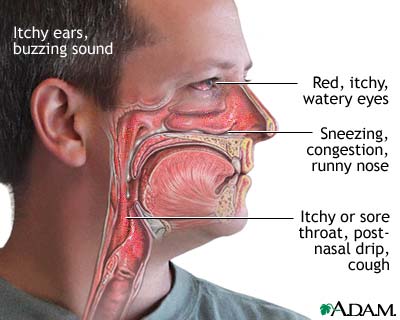
    - Coughing, congestion, wheezing, or sneezing

    - Runny, stuffy, or itchy nose

    Severe Symptoms:

    - Breathing difficulties

    - Sweating, dizziness, and faintness

    - Rapid or sudden heart rate increase

    - Sudden inability or hoarseness to speak

    - Extreme and sudden facial itching and swelling

    - Anaphylaxis

    What Causes Allergies?

    The immune system of a person with an allergy tries to combat allergens. It looks upon the small driftwood of everyday life house dust, pollen, animal dander, and mold as outsiders that are sure to do some dreadful damage.

    In order to recognize and capture these strangers, it is important that people know who the culprits are. They should try to educate themselves on how allergies work and what causes them because these are the only means to find the solution to the problem.

    Basically, allergies are agitated reactions of the immune system to certain foreign substances to the human body. These stuffs are known as allergens.

    Allergens are then classified into four categories based on where they have come from. By knowing these four classifications of allergens, an individual could identify where he is allergic.

    Normally, if a person is having persistent allergic symptoms, but he cannot isolate the allergen, it is a good idea to see an allergist, get tested, and find out what the allergens are. In this way, people can easily find out what causes their allergy and resolve the problem.

    Who is at risk for allergies?

    Among all known diseases, allergies are placed among the most universally manifesting diseases among humans. It does not discriminate among the individuals to be infected. People of all ages, gender, culture, nationality and skin color have equal chances of developing them.

    Through the study of allergies and allergic attacks, it is apparent that some individuals have a higher probability of acquiring an allergic condition compared to other individuals exposed to the same particle.

    Each age level is particularly prone to a certain allergen. This fact should provide you with an idea on how you can at least minimize, if not perfectly avoid, the attack of allergy. Research shows that 7 to 8 out of 10 newly born infants have a large predisposition in acquiring hypersensitivity to anything in their surroundings. Moreover, 1 out of 7 American adults suffer from at least one type of allergic condition.

    Some even develop allergic reactions among substances used in clothing such as color dyes and bleaching chemical agent (contact dermatitis) and other forms of medications such as penicillin and other antibiotics (drug hypersensitivity).

    Some young adults who have experienced lesser attacks or were not put into any allergic state earlier in their life are apt to develop such condition should adequate trigger attacks (allergen particles) are present.

    What are seasonal allergies?

    Seasonal allergies are one type of allergic rhinitis. If you recall our chapter on allergic rhinitis you know that it is a type of allergy where breathing in an allergen becomes the source of an inflammatory reaction in the membranes of the nose. With this seasonal allergy, inflammation happens only during a particular period. This is most likely caused by molds, pollens, or other substances that are in the air during specific seasons.

    What treatments are available for different types of allergies?Allergies affect almost everyone since almost anything can trigger an allergic reaction. These reactions are caused by the immune system over-reacting to an allergen or the substance that causes the allergy. These reactions range from violent sneezing to itchy hives or in a more serious form, breathing difficulties.

    To address these reactions, the first line of defense is avoiding allergens that cause these allergic symptoms. Minimizing your exposure to allergens will translate less episodes of sneezing, coughing and itching.

    But since avoidance isnt possible at all times, your doctor can prescribe allergy medications and treatments, the correct kind and combination of which depends on the kind of symptoms you exhibit. Allergy medications come in pill, liquid, spray, eye drop and topical forms. Some can be bought over-the-counter while others require prescriptions.

    Always remember though that in taking medications whether OTC (over-the-counter) doctor-prescribed, consult with your doctor and inform him/her of your medical history before starting any allergy treatments.

    Antihistamines

    Histamines are chemicals released by the immune system as part of the reaction to an allergen. This substance is responsible for the inflammation or swelling of nasal passage, the skin or any other part affected by an allergy. As the name suggests, antihistamines prevent histamines to cause such reactions reducing redness, swelling, hives and watery eyes. They are prescribed in the form of liquids, sprays, pills and drops.Corticosteroids

    With the exception of some OTC creams, corticosteroids require a doctors prescription. Forms of corticosteroids include:

    - Eye drops relieve symptomatic itching and redness of the eyes due to hay fever. Contra-indications include eye infections, glaucoma, and pregnancy. So if any of these apply to you, avoid using corticosteroid eye drops. Contact lens users are also more susceptible to eye infections when using these eye drops.

    -Nasal sprays

    Since it is administered directly to the affected area, nasal sprays are the preferred treatment for hay fever or allergic rhinitis to relieve stuffiness, runny nose and sneezing. However, relief may take time to set in and in some cases, only after regular use. Some of the side effects are an unpleasant taste, irritation that may cause nose bleeding especially during the winter months.

    - Creams that come in varying strengths of dosages are good for itching and scaling skin. However, be cautious of continued use as they can sometimes cause skin irritation.

    - Oral corticosteroids are prescribed for short periods to address more acute forms of allergic symptoms. But the long-term use of such has been known to cause side effects like cataracts and osteoporosis so prescription is regulated. Leukotriene modifiers

    These medicines work similarly to antihistamines in that they block the substances released by your immune system to aggravate allergic reactions. Leukotriene modifiers have been proven to treating allergic asthma and rhinitis.

    Injectible epinephrine

    Anaphylactic shock is a violent allergic reaction that affects key body functions such as the respiratory and cardiovascular system. This kind of reaction is similar to throwing a monkey wrench into a machine that puts the system in jeopardy. The danger of that kind of reaction is therefore very high.

    Immunotherapy

    If your condition doesnt see improvement in spite of medications or if taking them will incur adverse side effects, your doctor may recommend immunotherapy, which is the process of training your immune system not to react to substances that used to cause allergies for you. This can take as long as three to five years to finish. It is done by introducing extracts of the allergen into your body through a series of regulated injections. The goal is to make your body desensitized to the substance, which will eliminating or decrease your need to take medicines.

    This method is especially effective for people allergic to substances that are found everywhere and cannot be avoided (such as dust and pollen). The procedure is also helpful in arresting the development of asthma in children.

    Natural Remedies

    A lot of people nowadays turn to a holistic health lifestyle and rally for natural remedies like homeopathy or herbs to recover from certain illnesses. Natural remedies or alternative medicine encompasses a number of non-traditional ways for a healthier lifestyle.

    Some of these natural remedies are:

    1. Apitherapy

    Apitherapy is one of the natural remedies which makes use of bee products to help someone recover from a certain illness or condition. There are about 500 diseases that Apitherapy can heal.

    2. Applied Kinesiology

    Applied kinesiology can pinpoint body dysfunctions by identifying weak muscles.

    3. Aromatherapy

    Aromatherapy is the science of using essential plant oils for the betterment of one's well-being.

    The most common carrier oils are: sweet almond, olive, avocado, borage, apricot kernel, cocoa butter, sunflower, evening primrose, peanut, grape seed, hazelnut, sesame, jojoba, kukui, macadamia nut, pecan, rose hip, and shea butter.

    4. Ayurveda

    Considered the oldest health care system in the world that originated from India, Ayurveda stems from three biological principles: Vata which is the regulation of movement, Pitta for regulation of metabolism and Kapha for structure.

    5. Biofeedback

    Biofeedback is one of the natural remedies that use the body's signals for the improvement of health.

    6. Bodywork

    Bodywork employs deep tissue massage, balance of energy and movement awareness to improve one's health. It does not necessarily involve body touch but it takes care of the body's healing response.

    7. Buteyko

    One of the natural remedies to watch out for is buteyko which involves breathing exercises to help asthmatic people.

    8. Chinese Medicine

    Chinese medicine has always been known as one of the most popular natural remedies. Chinese Medicine is rooted from the Taoist belief the law of Yin and Yang. The person will experience less illness if the Yin and Yang is well-balanced. Chinese medicine is famous for its herbs like the Ren Shen, Dang Gui, Dan Shen, Mu Li, Du Huo and Fang Feng.One cannot talk about Chinese medicine without mentioning acupuncture. Acupuncture is able to diagnose the illness by the flow of Qi (energy).

    9. Color Therapy

    Color Therapy uses the spectrum to enhance the energy center or Chakra of the body and also improve the body's healing process.

    10. Flower Essences

    Dr. Edward Bach discovered in 1930 that flowers contain energy that can put human discord to an equilibrium.

    11. Gemstone Therapy

    There is such a thing as a healing gemstone that can alleviate ill body conditions. A gemologist must be consulted as synthetic gems are useless.

    12. Herbology

    Natural remedies are immediately associated with herbs. Herbs are classified into aromatic, astringent, bitter, mucilaginous and nutritive. Proven to improve health, herbs are great sources of vitamins and minerals. Vitamin A can be found in alfalfa, saw palmetto and dock, whereas bee pollen, juniper berry and peppermint are rich in Vitamin C. For one's calcium fix, there's aloe vera and fennel seed.

    13. Homeopathy

    Homeopathy involves the use of active ingredients in small doses together with natural substances for a healthier balance.

    15. Iridology

    Iridology is diagnosing through the irises, as they are human parts that show signs of physical and mental illnesses.

    16. Macrobiotics

    Macrobiotics is achieving over-all wellness by changing one's lifestyle, diet and attitude. It comes from the words macro which means great, and bios which means life.

    17. Meditation

    What can be more natural than just looking for a quiet spot and muse deeply on series of subjects that will eventually lead to enlightenment? Stress is dramatically reduced and the body is recharged by deeply meditating.

    18. Music Therapy

    Music is language of the soul, so it is not surprising that there is such a thing as music therapy. So far, music therapy has incurred differences and benefits to people who practiced it. This is a fortified healthcare profession that is designed to do the following: promote well-being, express emotions, manage and combat stress, improve memory and alleviate aches and pains.

    19. Naturopathy

    Naturopathic medicine's principles are based on the belief that natural balances make up for a well-balanced internal chemistry.With those effective natural remedies, it is no wonder a lot of people have started employing each one of them in times of sickness. Most go for natural remedies just to maintain their healthy bodies.

    Avoiding Allergic Reactions

    Most allergens attack and trigger allergic reaction if they find themselves on the skin or inside the eye. Allergic reactions can happen through inhalation, ingestion or injectionand, as discussed previously, allergies can be seasonal as with the case of the hay fever or it can be drug or dust-induced and food-related.

    The production of an antibody called immunoglobulin happens upon the first exposure to an allergen. This immunoglobulin or (IgE) attaches itself to basophiles, a type of white blood cell and mast cells. The initial exposure may have a person extrasensitive to allergen but the symptoms may not be there. Subsequent exposures can eventually lead to more reactions and tissue irritations. Reactions can be mild or severe.Avoiding an allergy simply translates to one commonsense fact: avoid the allergen. This means the person has to discontinue using a drug, have the dust removed, put the pet outdoors, install effective air filters and simply avoid eating a particular food. If the allergy is severe, the person may consider moving out and finding a place that does not contain the allergen.

    Here are more ways to prevent an allergic reaction:

    1. Ask the doctor for an allergy kit.

    An allergy kit is used for severe allergic reactions, also called anaphylaxis. The kit must have the following: how-tos on using the kit, sterilized cotton swabs for cleansing the skin before and after the injection, Epinephrine which comes in a syringe and some Antihistamine tablets.

    Remember that the medications inside an allergy kit may lose their efficacy if exposed to direct sunlight or high temperature. The patient must watch out for the color of Epinephrine. It must be clear. Once it turns pinkish brown, it must be thrown away.

    2. You must wear a medical ID tag if you are susceptible to serious reaction so other people are alerted your allergy.

    3. There must be a thorough discussion on allergy shots or immunotherapy with the doctor.

    Allergy shots can reduce or totally ward off one's sensitivity to an allergen. These shots are for the following allergies:

    1. Pollen (trees, grasses and even ragweed)

    2. Dust motes and cockroaches.

    3. Dander from dogs and cats

    4. Fungus

    5. Insect venom (from bees, hornets, wasps, yellow jackets and fire ants)

    6. Medications

    As children are more susceptible to allergic reactions, the parent must exert extra effort to keep any allergic reaction at bay. Schools are often considered breeding ground for allergens so the parent and school administrators must work hand in hand. The home must also be allergen-proof so the children can go about freely.

    Allergic reactions are dangerous and fatal, if left untreated or if the person is more susceptible than usual. It is mandatory that preventive measures must be carried out to avoid the severe symptoms. For more information on allergic reactions, one must ask the family doctor.

    Properly diagnosed and treated, allergies need not affect your life in any significant manner.

    Adam Asar manages http://www.quranichealing.com for spiritual healing driven from the Holy book of Quran. He speaks three languages. Adam's sincere desire is to share the peace and love embodied in the (Holy) Quran teachings.

    Adam is also the founder of http://www.howto101.info

    Article Source: http://EzineArticles.com/?expert=AdamAsar
    http://EzineArticles.com/?How-to-Ease-Your-Allergies:-Quick-Relief-for-Allergy-and-Asthma-Sufferers!&id=149105

    Monday, October 6, 2008

    Allergy Free Dogs They're Nothing to Sneeze At!

    Allergy Free Dogs - They're Nothing to Sneeze At!
    By Richard Livitski

    Allergy free dogs are a great solution for would be dog owners that have allergies. Many dog lovers that thought they would never be able to own a dog because of the uncontrollable symptoms to pet dander, may not have considered a hypoallergenic dog. A small number of dog breeds are considered hypoallergenic, meaning they do not cause allergic reactions, either because they shed only small amounts of hair or because their dog dander is not allergy producing.

    Keep in mind that there is no such thing as a non-allergenic dog or a non-shedding dog, a common misconception by some owners with allergy problems that purchase dogs believing they will be cured of dog dander issues.

    Although the amount of allergy producing dander will be reduced with a hypoallergenic dog, owners still need to go through a regular routine to ensure that pet dander from pet hair is removed from their environment. It is important to recognize that it isnt the pet hair itself causing the allergic reaction, but the dander that comes off when the dog shedding occurs. Dogs that make little to no dander are the dogs that are considered hypoallergenic dogs and will be best suited for a home with someone who is allergy sensitive.

    What Causes Dog Allergies...

    As previously noted, it is not the actual dog or even the hair of the dog, but the dander that flakes off the skin and causes allergies. Unfortunately, this dander can easily be carried throughout the house when it attaches to the hair of the dog, falls onto the floor, couches or beds of a home, causing potential allergens to be spread throughout the home.

    Keep in mind that many humans with allergies will make the mistake of buying a hairless dog or a short-haired dog thinking they will produce less allergens than a long-haired breed. This is not always the case. In fact, some medium to long-haired dogs produce little to no dander, while other short haired dogs produce a lot of dander. Remember that all dogs produce dander, it is just that some produce a great deal less than others.

    Tips for Reducing Pet Allergens...

    1. Purchase a high suction vacuum that can quickly and effectively remove almost all pet dander from the home. Use this on a daily to weekly basis as needed.

    2. Find a large air purifier that can be used in the main areas of the house. Keep the air purifier running at all times in order to effectively reduce dander. Remember to clean the purifier on a regular basis as well.

    3. Brush your pet 2-3 times a day. Give dogs a bath at least once a week to remove excess dander. Do this outside so that dander will not collect in part of the home.

    4. Limit dog access to your sleeping and sitting areas. Regularly wash sheets, curtains, pillow covers, table clothes and any other removable upholstery covers.

    A List of Hypoallergenic Dog Breeds...

    Afghan Hound

    American Hairless Terrier

    Basenji

    Bedlington Terrier

    Bichon Frise

    Border Terrier

    Chinese Crested Dog

    German Shorthaired Pointer

    Greyhound

    Italian Greyhound

    Irish Water Spaniel

    King Blue Terrier

    Lhasa Apso

    Maltese

    Mexican Hairless

    Peruvian Ina

    Poodles (all)

    Portuguese Water Dog

    Schnauzers (all)

    Shih Tzu

    Yorkshire Terrier

    Wheaten Terrier

    Whippet

    Also, if you have allergies and are considering the purchase of a allergy free dog, it might be wise to spend as much time as possible around the dog beforehand to see how you will react. By doing so, it might save you, and the dog, from the emotional turmoil of having to give up your new friend if you find your allergenic reactions too strong.

    When Richard Livitski isn't busy running around after his own dogs, he's working on his dog names website http://www.dog-names-and-more.com where dog names as well as grooming, training, and dog care tips can be found.

    Article Source: http://EzineArticles.com/?expert=RichardLivitski
    http://EzineArticles.com/?Allergy-Free-Dogs---Theyre-Nothing-to-Sneeze-At!&id=491662

    Wednesday, October 1, 2008

    Bee Pollen Dog Allergy

    Bee Pollen Dog Allergy
    By John Gibb

    When speaking of bee pollen dog allergy it sort of makes you wonder why a dog would be taking bee pollen in the first place right? Dogs have been shown to highly benefit from the health advantages to adding bee pollen to the diet. Our canine friends are no exception to the rules.

    However a bee pollen dog allergy can be a very serious thing. Dogs can suffer allergies much the same as a human being would. Bee pollen dog allergy can range from very severe to extremely mild and generally goes unnoticed. Although it is rare, some canines have been known to suffer anaphylactic shock and it can be life threatening.

    Anaphylactic shock occurs when the body produces too much histamine to the point of swelling the throat and breathing passage closed. If your dog has ever suffered from this type of reaction from a bee sting or any type of bee pollen product, your dog likely has a serious bee pollen dog allergy and should not be fed any type of pollen products at all.

    Aside from bee pollen dog allergy there is the little known fact that this miracle substance made by another creature of the animal kingdom can be beneficial in the treatment and overall health of the dog. As it does in human, bee pollen adds essential nutrients to the diet that cannot normally be made in the system such as vitamin C, and therefore helps with overall maintenance of general health. Bee pollen dog allergy is not something that is commonly found in fish or small houseflies.

    It is essential that in order to treat bee pollen dog allergy that you recognize the signs of bee pollen dog allergy. Some of the signs can include noticing the dog having difficulty breathing and could be even throwing up.

    It is often difficult to tell if dogs experience skin rash or hives but if you can identify those, you should immediately cease giving the dog any kind of bee pollen treatment. Excessive itchiness noticeable on the dog or swollen skin, which again can be hard to identify can be a sign that your dog is suffering from bee pollen dog allergy.

    The product we personally use, located in the pristine source of New Zealand, is the most natural bee pollen source we have come across - http://www.bee-health-product.com

    We have been using this supplement for over 3 years with excellent health results. We have achieved a general sense of well being and new improved energy levels.

    We highly recommend you check out our bee pollen supplement of choice for further information.

    John Gibb runs a series of health websites. Check out our Bee supplement guide, for more information on bee pollen.

    Article Source: http://EzineArticles.com/?expert=JohnGibb
    http://EzineArticles.com/?Bee-Pollen-Dog-Allergy&id=457416

    Thursday, September 25, 2008

    Coping With Peanut Allergy

    Coping With Peanut Allergy
    By Nadine OReilly

    When your child develops a peanut allergy, the world instantly becomes a more dangerous place. One of the most difficult aspects of raising a child with a potentially lethal allergy is helping them develop a sense of joy and confidence. Growing up with a peanut allergy means knowing food can kill you, which in turn means growing up under constant stress. Studies have shown that children with peanut allergies live with high levels of fear and anxiety. Its important to find ways for your child to enjoy the world anyway.

    How do you help your child live a normal life when there is so much they have to avoid or be vigilant about? Social situations for children with peanut allergy are difficult because events almost always include food. Peanut allergies can destroy the carefree joy of childhood because of the required constant monitoring for potential dangers. As a parent, you understand well just how harmful the world is for your child, yet its so important to help them enjoy life and learn to function in the world and in society as well.

    One thing a child with a peanut allergy often faces is exclusion. As a parent, I have learned that children can be cruel. As a school psychologist, I have witnessed and intervened when children have called a student with a peanut allergy the peanut kid, or said such hurtful things like, get out of my way or Ill throw a peanut at you and youll die. Yes, these are true instances and they aimed to hurt the child just because he had a peanut allergy.

    Other children may find a food allergy strange, but they will generally accept it and continue on with their friendship. You may find it helpful to donate books to your childs classroom that talk about food allergies and the dangers, such as Peter Cant Eat Peanuts.

    While other children may handle your childs peanut allergy well, their parents may not. Adults have a tendency to shy away from children with such severe allergies, and this can pose problems and pain for your child in the form of being left out of activities, not invited to parties, not chosen to work on projects.

    On one hand, its not hard to see why people dont want to deal with the liability. How would it feel to know you were responsible for killing, or almost killing, a child because you offered them the wrong treat? If this were not your child, but a friends child who suffered from a peanut allergy, can you honestly say you would volunteer for the responsibility of caring for them? (Yes, we say, because its hard to be objective in our positions but really, really try to think about it.) Yet understanding a persons inherent reluctance to be involved with a child with a peanut allergy doesnt salve the wounded feelings of a child when they are the only one in the class not invited to a birthday party.

    As the parent of a child with a potentially fatal peanut allergy, you may find that you have to be more involved and more willing to go the extra mile than other parents. Talk to the parents of your childs friends one on one, or arrange at the beginning of the school year to meet the parents of your childs classmates, through the teacher. Explain your childs allergy, then volunteer your services for things like bringing treats to class or helping with birthday parties.

    You should be gentle and make sure the other parents know that you understand their potential worries about including your child in activities. Explain that you are concerned about your child being hurt by being excluded, and your main concern is that he or she gets to enjoy being as normal as possible. Show a positive attitude, and it will come through loud and clear that youre willing to work with everyone involved. Take the pressure off other parents in order for your son or daughter to have a more normal life, and make peanut-free snacks to give to your childs teacher so that birthday parties at school can be enjoyable for your child.

    When you do find people who want to help your child with a peanut allergy to be included, they might not be sure what to do, what they can do, or how they should react to an emergency. Informed people who know how to handle a situation in the event of an allergic reaction are typically more relaxed and confident about being around a person with special needs (yes, peanut allergy is a special need. Dont let teachers/administrators tell you otherwise.) Teach everyone with whom your child has contact how to use an Epi-pen, and make up laminated emergency cards with instructions and contacts to distribute to people who will be around your child regularly.

    Some parents still wont get it, or will be too uncomfortable to be involved. Thats certainly their right, and its good to explain such situations frankly to your child. They have to understand that people arent always going to change to accommodate their peanut allergies. They have to learn to maneuver through the world and still get joy out of it. Its kind of like learning to lose gracefully.

    An important thing to remember is that your child is going to have to learn to have these discussions about their peanut allergies with other people themselves. Youre not always going to be able to manage his or her social situations, especially as he or she grows. If you have a toddler or a youngster, give your day care provider a labeled photo of your child and make sure it is prominently displayed for all to see.

    Does your child know how to respond to people who offer treats and may cajole or pressure them into accepting? Even when a child knows their safety is at stake, its hard to get past that desire to be liked and approved of. Your child needs to know how to talk to other people, even grownups, about their situation and explain how the other person can help them. Prepare your child by role playing and acting out situations they may face and attitudes they may have to deal with. Peter Cant Eat Peanuts is an excellent tool for toddlers who are just beginning to cope with the differences in their lives caused by their peanut allergy.

    In some ways, coping socially when you suffer from a peanut allergy is getting easier. Peanut allergy has gotten a lot of media attention lately, from dramatic stories such as the girl who died after kissing her boyfriend because hed eaten a peanut-butter sandwich. Medical studies are providing other news stories, showing the dramatic rise of peanut allergies appearing in children. The publicity is helping alert the general population to the seriousness of this allergy, and perhaps instructing well-meaning people on how even tiny bits of peanut in the cookies they baked will hurt your child.

    One final note: Dont get so caught up in the social aspect of coping with peanut allergies that you miss the simple things that can bring your child joy. Its especially important that we emphasize that food is not the enemy, so adventures in food are a perfect bonding opportunity one that allows for quiet time, during which you can actually reach your child in these hectic times. There are a great many restaurants your child will never be able to eat at because of his or her peanut allergies. So, become a great cook. Take classes if reading a cookbook isnt enough to help you master the kitchen. This way you can safely introduce your child to cuisine that might be deadly in a restaurant, such as Chinese food which is so often cooked in peanut oil.

    While youre at it, teach your child to cook as well. Not only will you be providing a source of fun and adventure, youll be arming him or her to be able to keep their world as peanut-free as possible.

    Nadine O'Reilly, M.A. is a doctoral-level school psychologist and Coordinator of Special Services in northern New Jersey. She creates 100's of accommodation plans for disabled children each year. Nadine is the author of Peter Can't Eat Peanuts and the Empowered Toddler series of books. Nadine's son, Brendan, has a potentially fatal peanut allergy, and is asthmatic.

    Contact Nadine at nadine@access4allergickids.com
    http://www.access4allergickids.co

    Article Source: http://EzineArticles.com/?expert=NadineOReilly
    http://EzineArticles.com/?Coping-With-Peanut-Allergy&id=131570

    Some Hints To Help You Live With An Allergy To Peanuts

    Some Hints To Help You Live With An Allergy To Peanuts
    By Gregg Hall

    8% of children and 2% of adults in the United States are estimated to be affected by some form of allergy to food. Of that percentage, the most common food to elicit some form of allergic reaction is peanuts, which affects about three million Americans.

    When the immune system overreacts to a usually safe food, it is called an allergic reaction. The most severe reaction is called anaphylaxis. Anaphylaxis (a sudden drop in blood pressure) can sometimes, but rarely be fatal (killing about 1 of 2.5 million). Otherwise, common symptoms of food allergy are things such as hives, eczema, asthma and gastrointestinal symptoms (i.e. vomiting, diarrhea, abdominal cramping).

    Why do some people get food allergies? Could it be a result from genetics? Because previous twin studies have shown that there does seem to be a high rate of heritability of allergic diseases, a British study was conducted to compare the incidence of peanut allergy among siblings with general population incidence. The study involved 58 sets of twins, 14 of which were identical, and 44 of which were fraternal. These twins were recruited for having at least one member of the pair having a peanut allergy. 70 of the 115 had a history of peanut allergy.

    64% of the identical twins both had allergic reactions to peanuts, which was followed by a mere 7% between the fraternal twins. The conclusion was that based on the data and a model considering environmental and genetic factors, researchers calculated a heritability rate of 82%-87% for peanut allergy. The problem with this conclusion? Though the British study showed a genetic component in peanut allergies, environmental factors may have biased the results.

    When they did not consider genetic factors, the rate dropped to just under 19%.

    A group of researchers in the July 2000 Journal of Allergy and Clinical Immunology, the peer-reviewed, scientific journal of the American Academy of Allergy, Asthma and Immunology (AAAAI) agree that Genetics play a significant role in peanut allergies.

    Lead researcher Scott Sicherer, M.D. along with some of his colleagues from Virginia and Belgium performed a twin study. Their intent was to see if genetic factors influenced peanut allergy. They were checking this by comparing the incidence of peanut allergy between the identical twins and the fraternal twins. Twin studies are used frequently to provide information on how environmental and genetic factors should be compared and treated.

    Because there has yet to be solid evidence that there is a direct link between hereditary and allergies, many agree there needs to be more research and more studies dedicated to examine the role between genetics and allergies, so that we may reach a conclusion to this question.

    Gregg Hall is an author living in Navarre Florida. Find more about this as well as Peanuts, Almonds, Nut at http://www.favoritesnacknuts.com

    Article Source: http://EzineArticles.com/?expert=GreggHall
    http://EzineArticles.com/?Some-Hints-To-Help-You-Live-With-An-Allergy-To-Peanuts&id=286694

    Sunday, September 21, 2008

    Peanut Allergy Prevention is the Cure?

    Peanut Allergy - Prevention is the Cure?
    By Allen Matthews

    It seems only a careful inspection of every meal and every purchased food item (and some non-food items) is the cure for a food allergy.

    Careful avoidance of any trace of nut in your foods is paramount. With 50-100 American deaths caused by a peanut allergic reaction every year, an allergy to peanuts is not something anyone can afford to take lightly.

    However, there may still be hope for those who suffer severe reactions to peanuts.

    U.S. researchers may have created a drug that could help prevent severe allergic reactions to peanuts. A study, presented at the American Academy of Allergy Asthma and Immunology conference in 2003, claims to have created a drug that stops severe reactions to peanuts by trapping the molecule that causes the bodies allergic reaction to nuts.

    However, such research, even now, is still very much in its developmental stage.

    So if you are new to peanut allergies, or you have a family member or a close friend suffering from an allergy to peanuts, here is a general list of items that are likely to have peanuts or traces of peanut in them:

    Strict Avoidance Items include -

    Peanuts, peanut by-products (such as peanut butter, peanut brittle and so on), chocolate bars (possible cross contamination), health/energy bars, cakes and cookies

    Double Check The Label Items include -

    Pastries (if you can't confirm what they have been made with), sauces (praline sauce, pesto sauce, worcestershire sauce), marzipan, gravy and cereals

    Keep An Eye Out Items include -

    Shampoos, soaps and hand creams

    Its been said before, but it always pays to be reminded again, that you must always read the label but don't rely on it. Even be prepared to go as far as calling the food manufacturer of the product, simply to make sure.

    Having a peanut allergy can at times prove to be frustrating. But it need not stop you from doing what you want to do. It simply requires you to be a bit more careful about your food choices. So remember, until the cure arrives, prevention IS the cure...

    Allen Matthews is the main editor for http://www.PeanutAllergyFacts.com, and is one of many peanut allergic people in the world today.

    If you would like more information about this food allergy, visit http://www.PeanutAllergyFacts.com for free articles and all of the latest news about Peanut Allergies.

    Article Source: http://EzineArticles.com/?expert=AllenMatthews
    http://EzineArticles.com/?Peanut-Allergy---Prevention-is-the-Cure?&id=199812

    Thursday, September 18, 2008

    Allergy Air Purifier: Get Rid Of Allergy Attacks All Together

    Allergy Air Purifier: Get Rid Of Allergy Attacks All Together
    By Nathalie Lafleur

    For some people, merely breathing in the air in their homes can cause an allergy attack. Thats because the air we breathe can be filled with all sorts of impurities and substances that, if the person is allergic to them, can cause an attack thats so severe that its scary not only to the sufferer but to those who have to witness it. If you find yourself constantly having an allergy attack, even in the comfort of your own home, its best to think about buying an allergy air purifier. An allergy air purifier will eradicate those substances in the air that are causing those attacks, allowing you to breathe easier and allowing you to stay attack free.

    See An Allergist To Determine What Youre Allergic To

    The first thing you should do if you are having allergy attacks is to see an allergist. An allergist will give you an allergy test to see exactly what you are allergic to. Of course, in the mean time, you should get an allergy air purifier, just in case it is something in the air thats causing your attacks. However, if youre not sure what youre allergic to, your allergist will let you know. It could be that youre allergic to something youre eating or touching. More than likely, however, its because of the air you breathe.

    The air we breathe is filled with all sorts of impurities, such as pollen, grass, dirt, dust, pet dander, and more. All of these things can bring on a severe attack if someone is allergic to them. Thats where the allergy air purifier comes in. The allergy air purifier will take whatever it is that youre allergic to out of the air so that you never have another attack.

    This is especially useful as you sleep. If you have an attack when you are sleeping, you could stop breathing and not even realize it. This is very dangerous and shouldnt be chanced. Buy an allergy air filter and stick it in the corner of your bedroom. You can even put one in every room of your house just to make sure that you are cleaning the air in your home efficiently.

    If youre having allergy attacks and you think its caused by the air youre breathing, stop suffering even one minute longer. Go out to your local department store or search online for an allergy air purifier. Just because youre allergic to certain things doesnt mean you must be forced into breathing them in. Get those things out of the air you breathe and go allergy free for once in your life.

    Get your free downloadable 43-page report: Air Purifiers Exposed at our brand new website on Air Purifiers. Discover more about some of the most popular Air Purifiers brands, like Oreck, Austin, Alpine, etc.

    Article Source: http://EzineArticles.com/?expert=NathalieLafleur
    http://EzineArticles.com/?Allergy-Air-Purifier:-Get-Rid-Of-Allergy-Attacks-All-Together&id=367488

    Mold Allergy How To Get The Help You Need

    Mold Allergy How To Get The Help You Need
    By Peter Crump

    A mold allergy can be misdiagnosed as being an allergy to a scent or a food. The most common allergy to mold manifests itself as asthma, but people who do have an allergy to mold or mildew can also have watery eyes, sneezing, stuffy nose, a cough or a skin rash. If a person already has asthma, mild exposure to mold can bring on an attack, where as a person without asthma may not even be bothered by it. Small amounts of mold, such as that on a shower curtain, are not serious and will not cause a mold allergy.

    If you are exposed to large amounts of mold or mildew, you should take steps to get rid of the source of mold. Some kinds of mold produce mycotoxins and the symptoms of this is much more severe than a mold allergy. Black mold, for example, results from heavy water damage, such as in a flood. You can usually smell the mildew in a home when you first enter it, but for those living there they are so used to it that they dont recognize it as the cause of their mildew allergy.

    Moisture and warmth are the two conditions under which mold spores grow at a rapid pace. Even though you may take extra care with cleaning, if some of the water seeps into cracks and crevices, mold can grow in very tiny places and this could be the cause of your mold allergies. Just because you cant see the mold or mildew doesnt mean that it isnt there. Sometimes, you can smell it before you see it and it is them you realize that what you thought was sinus problems could be a mold allergy instead.

    To keep your mold allergy to a minimum, you can make sure that you control the level of humidity in your home. The normal level should be below 40% and by using air-conditioners and dehumidifiers you can help prevent mold and mildew from developing. Under ideal circumstances, you should remove carpeting from the bedrooms of your home, or at least from the room of anyone that has a mold or mildew allergy. Foam rubber pillows and mattresses are also breeding grounds for mold and because they are dark, closets are also likely places where you can find mold.

    When someone in your home has a mold allergy, it does mean you have to make sure you dry everything before you put it away. Boots and shoes should be thoroughly dried before you put them in the closet and you should use bathroom cleaning products designed to kill mold. An exhaust fan in the kitchen will help moisture from cooking to build up and you should empty the garbage container before it starts to smell. All of these tasks are normal things you can do on a daily basis to help prevent another outbreak of a mold allergy.

    To find out more about Mold removal visit Peter's Website The Mold Removal Guide and find out about Mold Removal Products and more, including Mold allergies and toxic Mold.

    Article Source: http://EzineArticles.com/?expert=PeterCrump
    http://EzineArticles.com/?Mold-Allergy---How-To-Get-The-Help-You-Need&id=155642

    Getting Allergy Relief Inside

    Getting Allergy Relief Inside
    By Kerry Rodden

    If it is allergy season, you know it. You dont need someone on the news telling you the levels of pollen in the air. You dont need to be told that there is a cat lurking in the home. You dont need this because you feel it. If allergies are what cause you so many untold problems each day, you should always be on the look out for products that can help you to find some relief. The good news is that besides the allergy medications you need to take, there are other ways that you can improve your condition.

    For one, consider an air purifying system in your home. Since most of the allergens that effect those that live in your home are lurking in the air, adding a tool to help clean out the air will help you to find some benefits. If you have ever been in a home that uses an ionic air cleaner, for example, you may have felt a lesser allergy attack there. Thats because these units help to trap the allergens inside filters, or will react with them right in the air and neutralize them. That means that you dont have to breathe them in.

    Air cleaning products are widely available. If you decide to purchase one, make sure to find one that provides for allergen removal, specifically the type of allergy that you have. Finding a product that removes pollen, dust, dander, bacteria and other elements that are lurking in the air will be important to your overall well being. You can even purchase smaller units for your car or to wear around your neck to help reduce the allergens that you come in contact with while being out and about.

    Using an air purifier, you can find many benefits in overall health and well being. You can lessen the effect that your allergy has on you.

    Kerry Rodden is an expert on air purifiers, and has written many articles on air purifiers, fans, vacuum cleaners, air fresheners and a lot more.

    You can read more of Kerrys articles about air purifiers at http://www.lowplaces.net

    Article Source: http://EzineArticles.com/?expert=KerryRodden
    http://EzineArticles.com/?Getting-Allergy-Relief-Inside&id=397718